How to Become an AI Automation Specialist in 90 Days (Step-by-Step Roadmap)

What if you could completely transform your career in just three months? Sounds ambitious, right? But here’s the thing—becoming an AI automation specialist isn’t as complicated as most people think. You don’t need a PhD or years of coding experience. What you really need is a clear roadmap and the commitment to follow it.
The demand for professionals who understand AI automation is exploding right now. Companies everywhere are scrambling to find people who can help them work smarter, not harder. And the best part? You can position yourself for these high-paying roles in as little as 90 days if you know exactly what to learn and in what order.
In this guide, I’m going to walk you through a practical, week-by-week plan to learn AI automation step by step. Whether you’re a complete beginner or someone looking to pivot careers, this AI career roadmap will show you exactly how to get there.
What Does an AI Automation Specialist Actually Do?
Before we dive into the how, let’s talk about the what. An AI automation specialist is someone who designs, builds, and manages automated systems powered by artificial intelligence. Think of them as the bridge between complex AI technology and real-world business problems.
Here’s what a typical day might look like:
- Identifying repetitive tasks that can be automated
- Building workflows using AI tools and platforms
- Connecting different software systems to work together seamlessly
- Training AI models to handle specific business processes
- Monitoring and improving automated systems over time
The role is perfect for people who love solving puzzles and making things more efficient. You don’t need to be a programmer, though basic technical skills definitely help.
Why 90 Days Is Enough to Get Started
Here’s a reality check that might surprise you. Most AI automation courses and bootcamps are designed to be completed in 8 to 12 weeks. That’s because the tools and platforms available today have become incredibly user-friendly. Many of them require little to no coding knowledge.
Think about it this way. Five years ago, you needed extensive programming skills to build any kind of automation. Today, platforms like Zapier, Make, and various AI tools let you create powerful workflows by simply dragging and dropping elements.
The key is focused learning. Instead of trying to learn everything about AI, you concentrate on the specific skills that employers actually want. That’s exactly what this roadmap delivers.
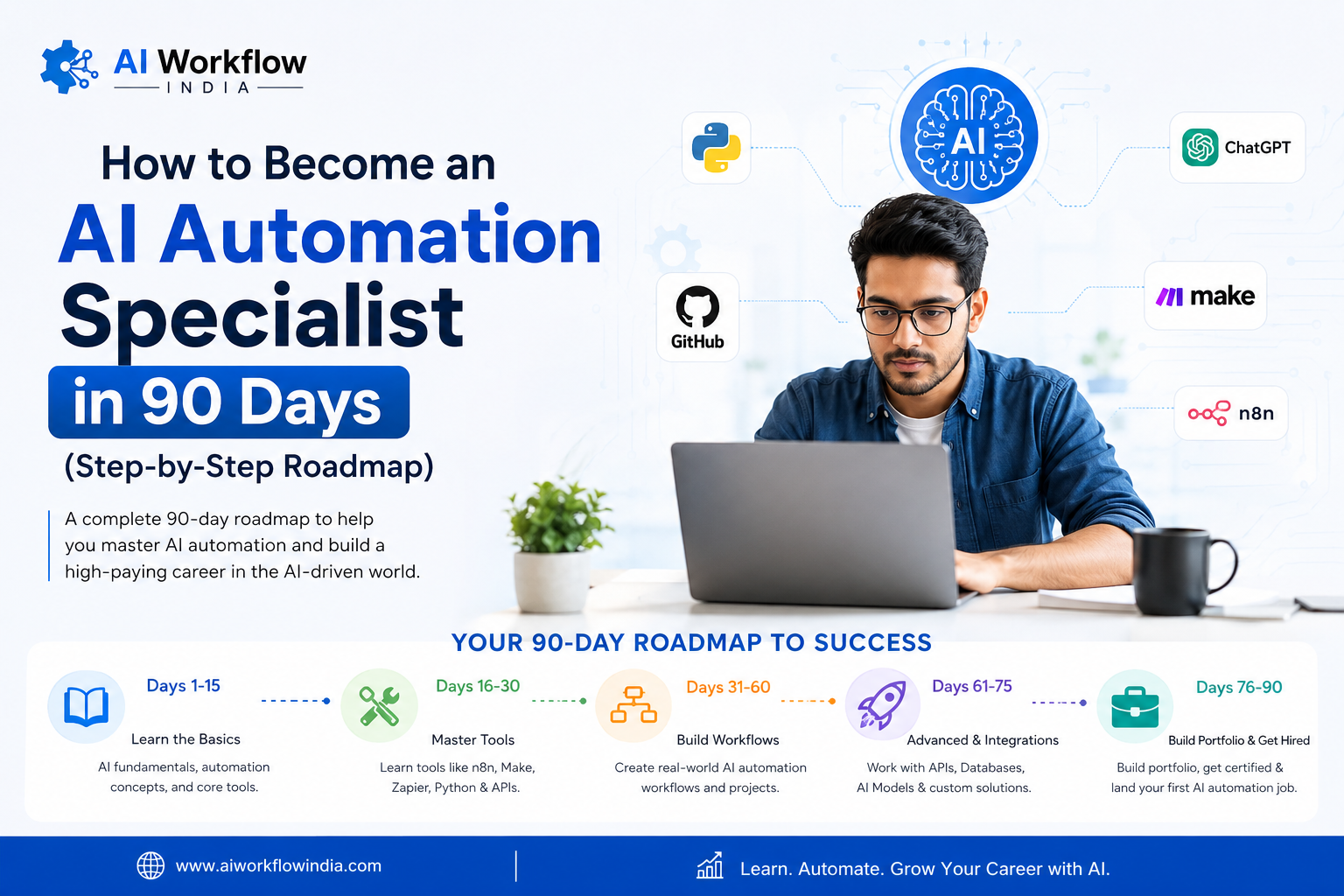
Your 90-Day AI Automation Learning Roadmap
Let’s break this down into three distinct phases. Each phase builds on the previous one, so don’t skip ahead even if you’re tempted.
Phase 1: Foundation Building (Days 1-30)
The first month is all about understanding the landscape. You need a solid foundation before you can build anything meaningful.
Week 1-2: Understanding AI Fundamentals
Start with the basics. What is artificial intelligence? How does machine learning work? What’s the difference between AI, automation, and AI automation? You don’t need to become an expert, but you should understand the core concepts well enough to explain them to someone else.
Free resources like Google’s AI courses and YouTube tutorials are perfect for this stage. Spend about 2-3 hours daily consuming this content.
Week 3-4: Introduction to Automation Tools
Now it’s time to get your hands dirty. Create free accounts on popular automation platforms:
- Zapier (great for beginners)
- Make (formerly Integromat)
- n8n (open source option)
- Power Automate (if you’re in the Microsoft ecosystem)
Build simple automations like sending automatic email responses or syncing data between apps. These small wins will boost your confidence and help you understand how everything connects.
Phase 2: Skill Development (Days 31-60)
Month two is where things get exciting. You’re going to learn the skills that actually make you valuable to employers.
Week 5-6: Mastering AI Tools
Focus on learning how to use AI tools within your automations. ChatGPT, Claude, and other language models can be integrated into workflows to handle tasks like content generation, data analysis, and customer support.
Learn prompt engineering—the art of writing instructions that get AI to do exactly what you want. This skill alone can set you apart from other candidates.
Week 7-8: Building Complex Workflows
It’s time to combine everything you’ve learned. Start building multi-step automations that solve real problems. For example:
- An automated content creation pipeline
- A lead qualification system for sales teams
- An invoice processing workflow
- A social media scheduling automation
For structured learning and hands-on projects during this phase, exploring resources at AI Workflow India can provide you with practical guidance and industry-relevant training materials.
Phase 3: Practical Application (Days 61-90)
The final month is about proving you can do this work professionally.
Week 9-10: Building Your Portfolio
Create 3-5 sample projects that showcase your abilities. Document everything—what problem you solved, how you approached it, and what results you achieved. Screenshots and video walkthroughs work great here.
If possible, volunteer to build automations for small businesses or nonprofits. Real-world experience trumps theoretical knowledge every time.
Week 11-12: Job Preparation and Networking
Update your LinkedIn profile to reflect your new skills. Join communities where AI automation professionals hang out. Start applying for entry-level positions or freelance gigs.
Consider getting certified. Many platforms offer certifications that look great on your resume and prove you know what you’re talking about.
Essential Skills Every AI Automation Specialist Needs
While you’re following this AI career roadmap, make sure you’re developing these core competencies:
Technical Skills:
- Workflow design and logic
- API basics and integrations
- Data handling and transformation
- Basic scripting (Python or JavaScript helps)
- Prompt engineering for AI tools
Soft Skills:
- Problem-solving and critical thinking
- Communication (explaining tech to non-tech people)
- Project management
- Attention to detail
The combination of technical know-how and soft skills makes you incredibly valuable. Many technically skilled people struggle to communicate effectively, so this gives you a real edge.
Best Resources to Learn AI Automation Step by Step
Not all AI automation courses are created equal. Here’s what I recommend based on your learning style and budget:
For Visual Learners:
YouTube channels dedicated to automation tutorials are goldmines. Channels like “Automation Masterclass” and “AI Jason” offer free, high-quality content.
For Hands-On Learners:
Platforms like AI Workflow India offer structured programs that combine theory with practical projects. This approach helps you build real skills while creating portfolio pieces.
For Self-Directed Learners:
Documentation and official tutorials from automation platforms are surprisingly comprehensive. Zapier University and Make Academy are excellent free resources.
Common Mistakes to Avoid When Learning AI Automation
I’ve seen many aspiring specialists make these errors. Don’t let them slow you down:
Trying to learn everything at once. Focus on one platform until you’re comfortable before exploring others. Depth beats breadth when you’re starting out.
Skipping the fundamentals. Yes, you want to build cool stuff. But understanding why something works helps you troubleshoot when things break.
Never building real projects. Watching tutorials feels productive, but it’s not the same as actually doing the work. Build something every week, even if it’s simple.
Ignoring the business side. Companies don’t hire people because they know tools. They hire people who can solve problems. Always frame your skills in terms of business outcomes.
What Can You Earn as an AI Automation Specialist?
Let’s talk about the payoff for all this effort. Entry-level AI automation specialists typically earn between $50,000 and $70,000 annually. With 2-3 years of experience, that jumps to $80,000-$120,000. Senior specialists and consultants can command $150,000 or more.
Freelancers often charge $50-$200 per hour depending on project complexity and their track record. Some automation specialists build their own productized services, earning passive income from templates and systems they’ve created.
The AI automation career path offers flexibility too. You can work for agencies, join in-house teams at large companies, or build your own consulting business. The skills translate across industries, from healthcare to finance to e-commerce.
Taking Action: Your Next Steps
You now have a complete AI career roadmap in front of you. The question is—will you follow it?
Start today, not tomorrow. Create accounts on the automation platforms I mentioned. Watch your first tutorial. Take that first small step.
Remember, 90 days from now, you could be in a completely different position professionally. You’ll have new skills, a growing portfolio, and opportunities that didn’t exist before. The AI automation field is still young enough that newcomers can make a real impact quickly.
The best time to start learning AI workflow automation was yesterday. The second best time is right now. Your future self will thank you for beginning this journey today.
Frequently Asked Questions
Do I need coding experience to become an AI automation specialist?
No, you don’t need extensive coding knowledge to get started. Many modern automation platforms use visual interfaces where you drag and drop elements to build workflows. However, learning basic scripting in Python or JavaScript can help you tackle more complex projects and increase your earning potential over time.
How much time should I dedicate daily to learn AI automation effectively?
For the 90-day roadmap to work, plan on spending 2-4 hours daily on learning and practice. Consistency matters more than intensity. It’s better to study for 2 hours every day than to cram 14 hours on weekends. Make sure at least half your time involves hands-on building, not just watching videos.
Can I get hired as an AI automation specialist without formal certification?
Absolutely. While certifications can strengthen your resume, employers care most about demonstrated skills. A strong portfolio showing real automations you’ve built often matters more than certificates. That said, platform-specific certifications from tools like Zapier or Make can boost your credibility and are worth pursuing once you’ve mastered the basics.
Related resources
- Explore our AI Automation Training for Professionals.
- More guides in Learn AI & Careers.