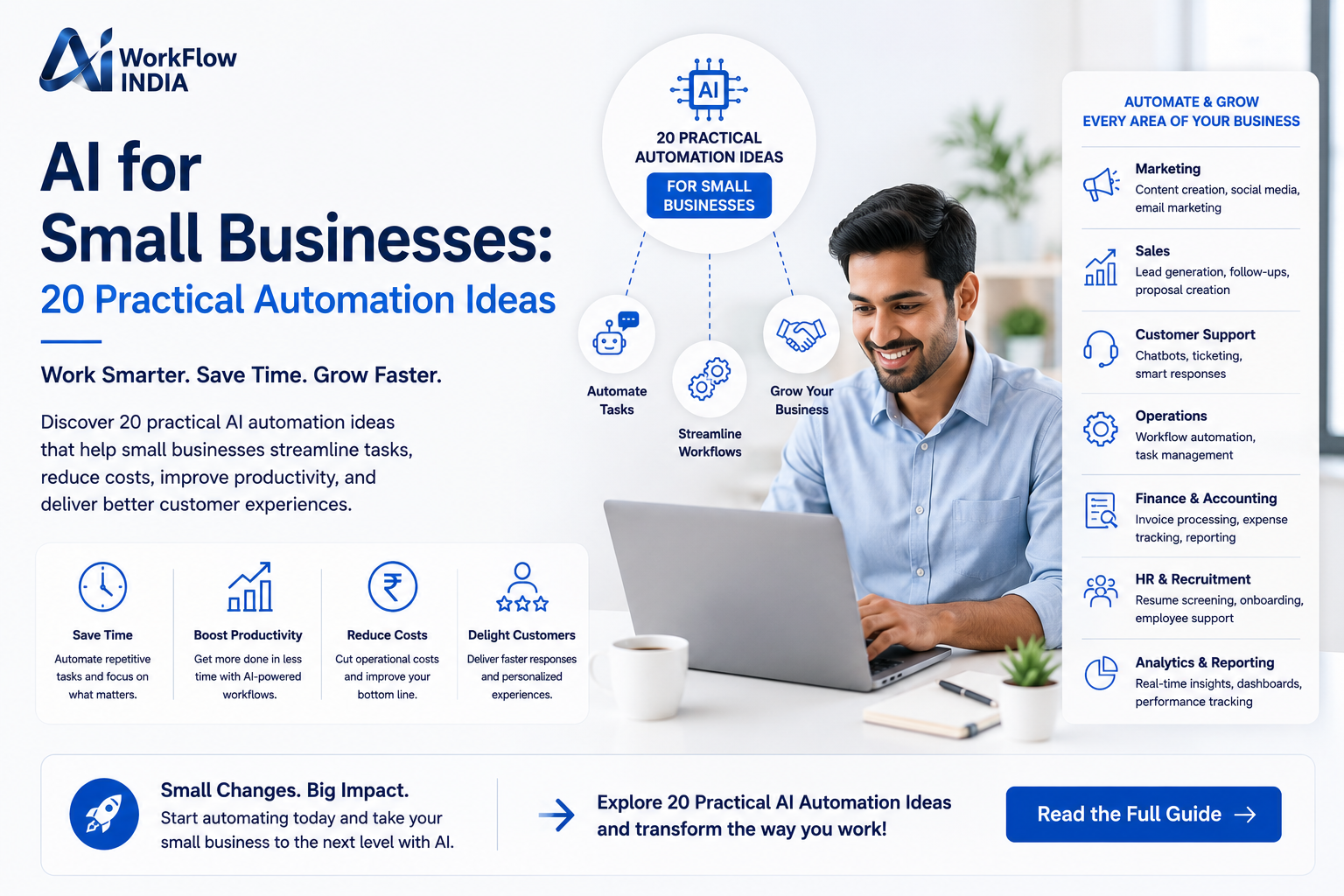
AI for Small Businesses: 20 Practical Automation Ideas

Running a small business means wearing too many hats. You’re the accountant, marketer, customer service rep, and everything in between. Sound familiar? Here’s the good news: AI for SMEs is no longer a luxury reserved for big corporations with deep pockets. Today, affordable and easy-to-use AI tools can handle repetitive tasks, save you hours each week, and help your business grow faster.
Whether you’re a local bakery owner or running an online consultancy, artificial intelligence can transform how you work. In this guide, we’ll explore 20 practical automation ideas that small businesses are already using to boost productivity and cut costs. Let’s dive in.
Why AI Matters for Small and Medium Enterprises
Small businesses often operate with tight budgets and limited staff. Every minute counts. That’s exactly why AI SMEs solutions have become game-changers. These tools automate mundane tasks, reduce human error, and free up your time to focus on what truly matters—growing your business.
According to recent studies, small businesses that adopt AI report up to 40% improvement in operational efficiency. The best part? You don’t need a tech degree to get started. Most modern AI tools are designed with simplicity in mind.
20 Practical AI Automation Ideas for Your Small Business
1. Automate Customer Support with AI Chatbots
Tired of answering the same questions over and over? AI chatbots can handle common customer inquiries 24/7. Tools like Tidio, Intercom, or Drift respond instantly, improving customer satisfaction while you sleep.
2. Smart Email Management
AI-powered email tools can sort your inbox, prioritize urgent messages, and even draft responses. Gmail’s Smart Reply and tools like SaneBox help you spend less time on emails and more time on actual work.
3. Automated Social Media Scheduling
Creating content is one thing. Posting consistently is another. Platforms like Buffer, Hootsuite, and Later use AI to suggest optimal posting times and even generate caption ideas based on your audience’s behavior.
4. Invoice and Expense Tracking
Nobody loves bookkeeping. AI accounting tools like QuickBooks, FreshBooks, and Wave automatically categorize expenses, send invoice reminders, and generate financial reports. Say goodbye to spreadsheet headaches.
5. AI-Powered Content Writing
Need blog posts, product descriptions, or marketing copy? AI writing assistants like Jasper, Copy.ai, and ChatGPT can help you create drafts in minutes. You’ll still want to add your personal touch, but the heavy lifting gets done faster.
6. Personalized Email Marketing Campaigns
Generic emails get ignored. AI tools in platforms like Mailchimp and ActiveCampaign analyze customer behavior to send personalized messages at the perfect time. This means higher open rates and better conversions.
7. Inventory Management Automation
For product-based businesses, AI can predict demand patterns and alert you when stock is running low. Tools like TradeGecko and Zoho Inventory prevent overstocking and stockouts.
8. Appointment Scheduling Made Simple
Back-and-forth emails to schedule meetings waste precious time. AI schedulers like Calendly and Acuity let clients book appointments based on your real-time availability. Integration with your calendar happens automatically.
9. Lead Scoring and Qualification
Not all leads are created equal. AI-powered CRM systems like HubSpot and Salesforce analyze leads and score them based on likelihood to convert. Focus your energy on prospects who are ready to buy.
10. Automated Data Entry
Manual data entry is tedious and error-prone. AI tools like Zapier and Microsoft Power Automate can move data between apps automatically. Connect your forms to spreadsheets, CRMs, and more without lifting a finger.
Expanding AI Capabilities Across Your Operations
Now that we’ve covered the basics, let’s explore more advanced ways artificial intelligence for small businesses can streamline your daily operations. These ideas might require a bit more setup, but the long-term benefits are substantial.
11. Voice Assistants for Daily Tasks
Alexa for Business and Google Assistant can manage calendars, set reminders, and even control smart office devices. It’s like having a virtual secretary who never takes a day off.
12. AI-Driven Recruitment
Hiring the right people is crucial. AI recruitment tools like Workable and Breezy HR screen resumes, rank candidates, and schedule interviews automatically. Find great talent without drowning in applications.
13. Sentiment Analysis for Customer Feedback
Understanding what customers really think can be tricky. AI sentiment analysis tools scan reviews, social mentions, and survey responses to give you actionable insights. Know your strengths and fix problems fast.
14. Predictive Sales Analytics
What if you could predict next month’s sales? AI analytics platforms examine historical data to forecast trends, helping you make smarter decisions about inventory, staffing, and marketing budgets.
15. Automated Meeting Notes
Tools like Otter.ai and Fireflies record meetings, transcribe conversations, and highlight key action items. Never miss important details, even when you’re multitasking.
If you’re wondering where to begin with implementing these solutions, consider exploring professional AI training for SMEs to help your team get up to speed quickly and effectively.
16. Dynamic Pricing Optimization
For e-commerce businesses, AI can adjust prices in real-time based on demand, competition, and market conditions. Tools like Prisync and Competera help maximize profits without constant manual adjustments.
17. Automated Report Generation
Creating weekly or monthly reports takes time. AI business intelligence tools like Tableau and Google Looker pull data from multiple sources and generate visual reports automatically.
18. Fraud Detection and Security
Small businesses are often targets for fraud. AI security tools monitor transactions and flag suspicious activity before damage occurs. Payment processors like Stripe have built-in AI fraud detection.
19. Customer Churn Prediction
Losing customers is expensive. AI analyzes engagement patterns to identify at-risk customers before they leave. This gives you the chance to reach out with special offers or improved service.
20. Workflow Automation Across Departments
Connect all your business tools using AI-powered workflow platforms. When a new order comes in, automatically update inventory, notify the shipping team, send a confirmation email, and log the sale—all without human intervention.
Getting Started with AI: Tips for Small Business Owners
Feeling overwhelmed? Don’t worry. You don’t need to implement all 20 ideas at once. Here’s how to start smart:
- Identify your biggest time drains – What tasks eat up most of your week?
- Start with one tool – Master it before adding more
- Choose user-friendly platforms – Look for no-code solutions with good support
- Measure results – Track time saved and ROI to justify expansion
- Invest in learning – Understanding AI basics helps you make better decisions
Many SME automation solutions offer free trials. Test them out and see what fits your workflow before committing financially.
The Future of AI in Small Business
We’re still in the early days of the AI revolution. As technology improves, tools will become even more accessible and affordable for small businesses. Those who adapt now will have a significant competitive advantage.
Think about it this way: your competitors are likely exploring AI tools for small enterprises right now. The question isn’t whether you should adopt AI—it’s how quickly you can get started.
The businesses that thrive in the coming years will be those that embrace technology while maintaining the personal touch that makes small businesses special. AI handles the routine work; you bring the creativity, passion, and human connection.
Ready to take the next step? Start with one automation idea from this list, implement it this week, and watch how it transforms your daily operations. Your future self will thank you.
Frequently Asked Questions
Is AI affordable for small businesses with limited budgets?
Absolutely. Many AI tools offer free tiers or low-cost plans specifically designed for small businesses. You can start with basic features and scale up as your business grows and you see positive results.
Do I need technical skills to implement AI automation?
Not at all. Most modern AI SMEs solutions are built for non-technical users. They feature drag-and-drop interfaces, templates, and excellent customer support to help you get started without coding knowledge.
How long does it take to see results from AI automation?
Many businesses notice immediate time savings within the first week. However, the full impact—including improved customer satisfaction and increased revenue—typically becomes clear within two to three months of consistent use.
“`
—
**For Rank Math Meta Post:**
**Title:**
AI for Small Businesses: 20 Practical Automation Ideas | SME Guide
**Meta Description:**
Discover 20 practical AI automation ideas for small businesses. Learn how AI SMEs solutions can save time, reduce costs, and boost productivity today.
**Meta Keywords:**
AI SMEs, AI for small businesses, small business automation, AI tools for SMEs, artificial intelligence small business, SME automation solutions, AI business tools
Related resources
- Explore our no-code AI training for business owners.
- More guides in AI Tools for Business.