SATF Explained: A Practical AI Adoption Framework

Let’s be honest. Most businesses want to adopt AI but have no idea where to start. They hear about ChatGPT, machine learning, and automation. Yet when it comes to actual implementation, things get messy fast.
That’s exactly why you need an AI transformation framework. Not just any framework—one that actually works in the real world. Enter SATF, a practical approach that’s changing how companies embrace artificial intelligence.
In this guide, we’ll break down everything you need to know about SATF. You’ll learn what it stands for, how it works, and why it might be the missing piece in your digital transformation puzzle.
What Is SATF and Why Does It Matter?
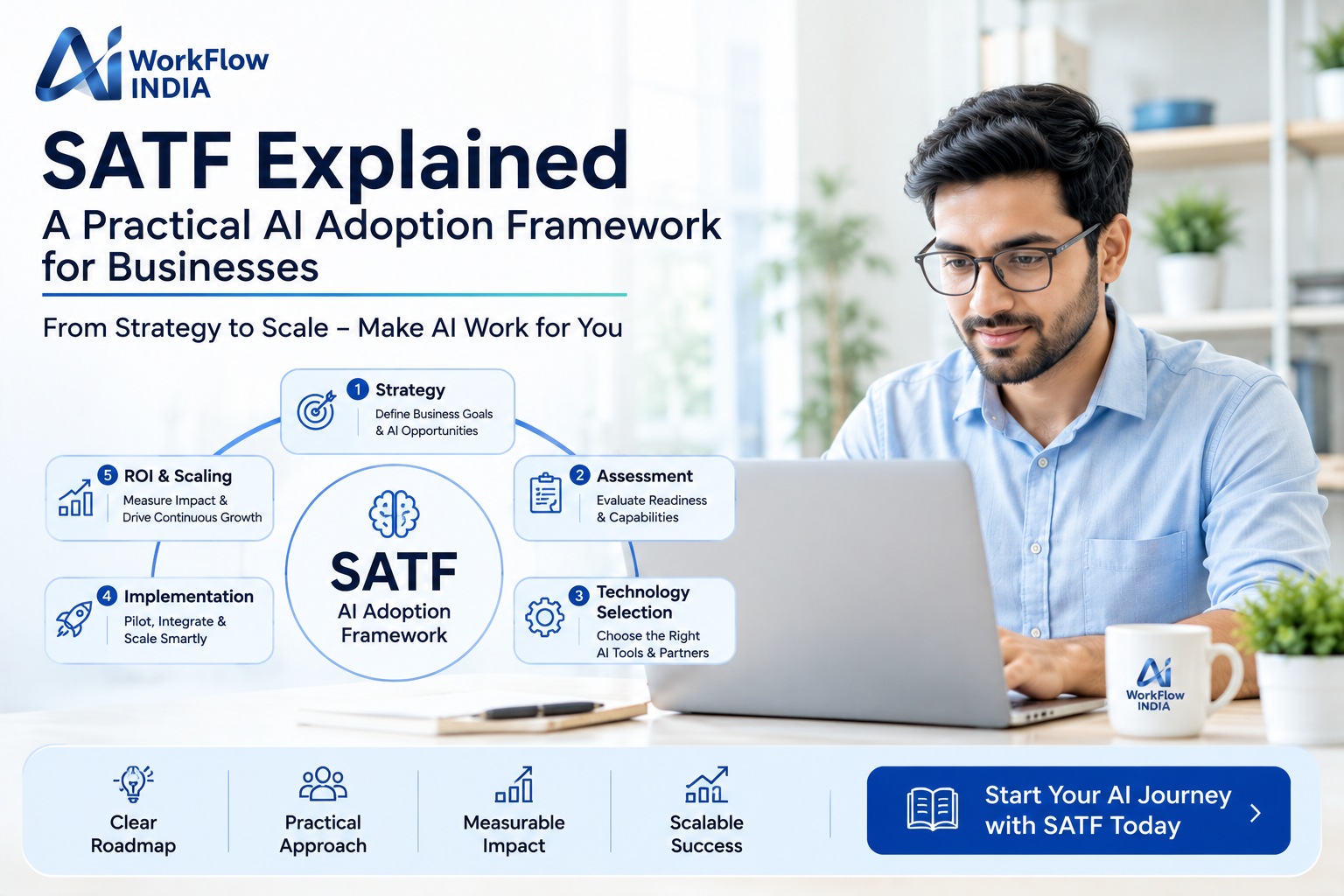
SATF stands for Strategic AI Transformation Framework. Think of it as your roadmap for integrating AI into your business operations. Instead of jumping into AI projects randomly, SATF gives you a structured path forward.
Here’s the problem most companies face. They invest heavily in AI tools without a clear strategy. Six months later, they’ve spent thousands with little to show for it. Sound familiar?
The SATF approach solves this by focusing on four key pillars:
- Strategy alignment with business goals
- Assessment of current capabilities
- Technology selection based on needs
- Framework implementation with measurable outcomes
Each pillar builds on the previous one. You can’t skip steps without risking failure. This systematic approach is what separates successful AI adopters from those who struggle.
The Four Pillars of the AI Transformation Framework
Pillar 1: Strategic Alignment
Before touching any AI tool, you need clarity. What business problems are you trying to solve? Where does AI fit into your bigger picture?
This first pillar forces you to answer tough questions:
- What are your top three business priorities this year?
- Which processes consume the most time and resources?
- Where would automation create the biggest impact?
Too many organizations chase shiny AI objects. They implement chatbots because competitors have them. They buy expensive analytics platforms without knowing what to analyze. Strategic alignment prevents this waste.
Pillar 2: Capability Assessment
Now comes the reality check. What can your organization actually handle? This assessment covers three areas:
Technical Infrastructure: Do you have the data systems, cloud capabilities, and integration points needed for AI?
Human Resources: Does your team have AI literacy? Can they work alongside intelligent systems?
Organizational Readiness: Is your company culture open to change? Will leadership support the transformation?
Be brutally honest during this phase. Overestimating your capabilities leads to failed projects and frustrated teams.
Pillar 3: Technology Selection
With strategy defined and capabilities assessed, you’re ready to choose tools. But here’s the secret—technology comes third, not first.
This pillar involves matching AI solutions to your specific needs. You might need:
- Natural language processing for customer service
- Predictive analytics for inventory management
- Computer vision for quality control
- Robotic process automation for repetitive tasks
The key is starting small. Pick one use case. Prove value. Then expand. This iterative approach reduces risk while building organizational confidence.
Pillar 4: Implementation Framework
Finally, you execute. But not randomly. SATF provides a phased implementation approach that keeps projects on track.
For a comprehensive guide on applying these principles to your organization, explore the SATF AI transformation framework in detail. It offers step-by-step guidance tailored to various industry contexts.
Implementation typically follows these stages:
- Pilot: Test with a small team or department
- Learn: Gather feedback and measure results
- Refine: Adjust based on real-world performance
- Scale: Roll out across the organization
Real-World Benefits of Using an AI Adoption Strategy
Companies using structured frameworks like SATF report significantly better outcomes. Here’s what the data shows:
Higher Success Rates: Organizations with clear AI implementation strategies see 70% more successful deployments compared to ad-hoc approaches.
Faster Time to Value: Structure eliminates guesswork. Teams spend less time figuring things out and more time executing.
Better ROI: When AI investments align with business priorities, they generate measurable returns. No more expensive experiments that go nowhere.
Reduced Risk: Phased implementation catches problems early. You can pivot before small issues become major disasters.
Improved Buy-In: Clear frameworks help communicate plans to stakeholders. Executives, managers, and frontline workers all understand their roles.
Common Mistakes in Enterprise AI Integration
Even with a framework, things can go wrong. Watch out for these pitfalls:
Starting Too Big
Ambition is great. But launching a company-wide AI overhaul on day one rarely works. Start with manageable pilots. Build momentum through quick wins.
Ignoring Change Management
AI changes how people work. Employees may feel threatened or confused. Successful transformations invest heavily in training, communication, and support.
Neglecting Data Quality
AI systems are only as good as their data. Garbage in, garbage out. Before deploying any AI solution, ensure your data is clean, organized, and accessible.
Skipping Governance
Who owns AI decisions? What happens when algorithms make mistakes? Establishing governance structures upfront prevents chaos later.
How to Get Started with Your AI Transformation Journey
Ready to begin? Here’s a practical action plan:
Week 1-2: Assemble your core team. Include business leaders, IT staff, and frontline employees. Diverse perspectives matter.
Week 3-4: Conduct your strategic alignment exercise. Identify three to five areas where AI could create value.
Week 5-6: Complete your capability assessment. Be honest about gaps in technology, skills, and culture.
Week 7-8: Research potential solutions. Talk to vendors. Review case studies from similar organizations.
Week 9-10: Design your pilot project. Keep scope narrow. Define clear success metrics.
Week 11+: Launch, learn, and iterate. Use insights to plan your next phase.
This timeline can flex based on your organization’s size and complexity. The important thing is maintaining momentum while staying disciplined.
Why SATF Stands Out Among Digital Transformation Models
Plenty of business AI frameworks exist. What makes SATF different?
First, it’s genuinely practical. Some frameworks read like academic papers—interesting but hard to apply. SATF was built by practitioners for practitioners.
Second, it acknowledges organizational reality. Not every company has Silicon Valley resources. SATF scales from small businesses to large enterprises.
Third, it emphasizes measurement. Every stage includes clear metrics. You always know whether you’re succeeding or need to adjust course.
Finally, it’s adaptable. Technology evolves rapidly. SATF’s principles remain relevant even as specific tools change.
The Future of AI Frameworks in Business
AI adoption will only accelerate. Gartner predicts that by 2026, over 80% of enterprises will have used generative AI APIs or deployed AI-enabled applications.
Organizations without structured approaches will fall behind. Those with frameworks like SATF will navigate this future confidently.
The companies thriving five years from now are making framework decisions today. Which category will your organization fall into?
Take the first step now. Review the complete SATF methodology and begin mapping your transformation journey. Your future competitive advantage depends on it.
Frequently Asked Questions
What does SATF stand for in AI transformation?
SATF stands for Strategic AI Transformation Framework. It’s a structured methodology that helps organizations plan, implement, and scale artificial intelligence initiatives. The framework covers strategy alignment, capability assessment, technology selection, and phased implementation to ensure successful AI adoption.
How long does it take to implement an AI transformation framework?
Initial planning typically takes 8-10 weeks for most organizations. However, full transformation is an ongoing process. Pilot projects might run 3-6 months before scaling. Complete enterprise-wide implementation often spans 18-24 months, depending on company size and complexity.
Can small businesses use the SATF framework effectively?
Absolutely. While SATF works for enterprises, its principles scale down for smaller organizations. Small businesses can simplify assessments and choose more accessible AI tools while still following the strategic approach. The framework’s flexibility makes it valuable for companies of any size.
“`
—
**For Rank Math Meta Post:**
**Title:**
SATF Explained: A Practical AI Adoption Framework for Business Success
**Meta Description:**
Discover the SATF AI transformation framework and learn how to implement AI strategically. Get practical steps for successful enterprise AI adoption today.
**Meta Keywords:**
AI transformation framework, SATF framework, AI adoption strategy, enterprise AI integration, business AI framework, digital transformation AI, AI implementation strategy
Related resources
- Explore our SATF AI Transformation Framework.
- More guides in AI Adoption for Organizations.