
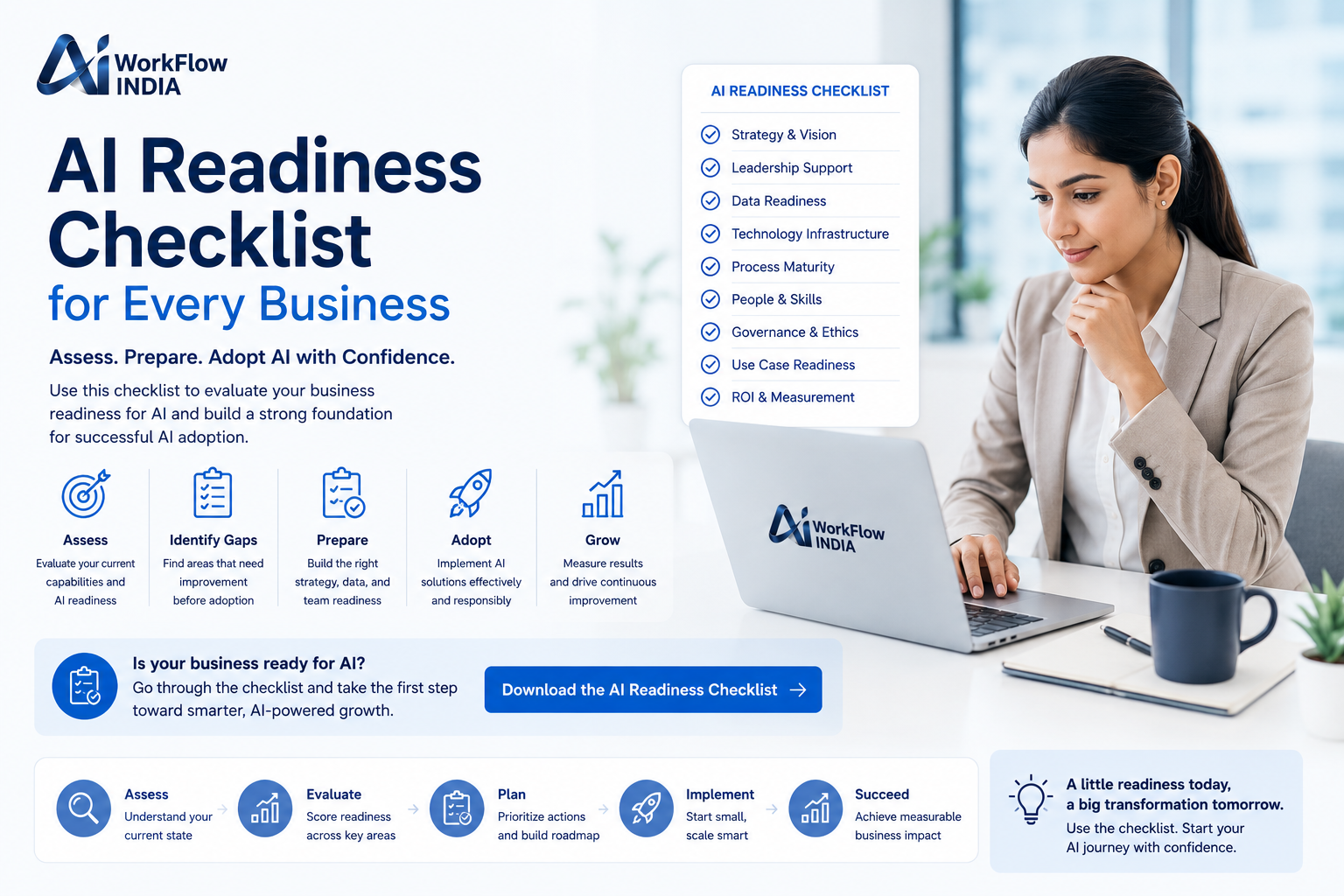
AI Readiness Checklist for Every Business

AI Readiness Checklist for Every Business
Is your business ready for artificial intelligence? If you’re not sure, you’re not alone. Thousands of companies are asking the same question right now. The truth is, jumping into AI without proper preparation can waste money and resources. But with the right approach, AI can transform how you operate.
That’s exactly why AI readiness matters so much today. It’s not about having the biggest budget or the most advanced technology. It’s about understanding where you stand and what steps to take next. In this guide, we’ll walk through a complete checklist that any business can use to prepare for AI adoption.
What Does AI Readiness Really Mean?
Let’s start with the basics. AI readiness refers to how prepared your organization is to implement and benefit from artificial intelligence solutions. Think of it like building a house. You need a solid foundation before adding walls and a roof.
Being AI-ready involves several factors:
- Having clean, organized data
- Building the right team with necessary skills
- Creating a culture open to change
- Setting clear business goals for AI projects
- Establishing proper infrastructure and security
Many businesses make the mistake of buying AI tools before checking these boxes. The result? Expensive software that sits unused or delivers poor results. A proper assessment prevents this from happening.
Why Your Business Needs an AI Readiness Assessment
You might wonder if this preparation is really necessary. Can’t you just start using AI tools right away? Technically, yes. But here’s what happens without proper preparation.
Companies that skip the assessment phase often face:
- Wasted investments on tools that don’t fit their needs
- Poor adoption rates among employees
- Data quality issues that produce unreliable results
- Security vulnerabilities they didn’t anticipate
- Missed opportunities to solve real business problems
On the other hand, businesses that assess their readiness first see faster implementation times and better return on investment. They know exactly what they need and where to focus their efforts.
The Complete AI Readiness Checklist
Now let’s dive into the actual checklist. Use this as your guide to evaluate where your business stands today.
1. Data Quality and Accessibility
AI runs on data. Without good data, even the best algorithms will fail. Ask yourself these questions:
- Is your data stored in organized, accessible systems?
- Do you have processes to clean and update data regularly?
- Can different departments share data easily?
- Do you know what data you have and where it lives?
If you answered “no” to any of these, start here. Data preparation is often the most time-consuming part of AI adoption, but it’s also the most important.
2. Technology Infrastructure
Your current technology setup matters more than you might think. AI applications need computing power, storage, and connectivity to function properly.
Consider these infrastructure elements:
- Cloud capabilities – Can you scale resources up or down as needed?
- Integration potential – Will AI tools connect with your existing software?
- Processing power – Do you have enough computing resources?
- Network speed – Is your internet fast and reliable enough?
Many businesses find that moving to cloud-based systems makes AI adoption much easier. It provides flexibility without huge upfront costs.
3. Team Skills and Knowledge
People power AI projects. You need team members who understand both the technology and your business goals. This doesn’t mean everyone needs to become a data scientist. But your team should include or have access to:
- Someone who understands AI basics and possibilities
- People who can manage and clean data
- Leaders who can connect AI to business outcomes
- Staff willing to learn new tools and processes
Training existing employees often works better than hiring all new people. They already know your business and can spot opportunities others might miss.
4. Clear Business Objectives
This is where many companies stumble. They want AI because it seems exciting, not because they have specific goals. Successful artificial intelligence implementation starts with clear questions like:
- What problem are we trying to solve?
- How will we measure success?
- What processes could benefit most from automation?
- Where do we lose time or money that AI could save?
When you start with the problem, choosing the right AI solution becomes much easier. You’re not just buying technology for technology’s sake.
5. Organizational Culture
Even perfect technology fails if people resist using it. Your company culture plays a huge role in AI success. Look for these signs of a ready culture:
- Leadership actively supports new technology initiatives
- Employees feel comfortable suggesting changes
- Failures are treated as learning opportunities
- Teams collaborate across departments
If your culture isn’t quite there yet, work on building trust and openness before rolling out major AI projects. Change management is just as important as the technology itself.
How to Evaluate Your Current AI Readiness Level
After reviewing the checklist, you need to honestly assess where you stand. Most businesses fall into one of three categories:
Beginning Stage: You’re just starting to think about AI. Data might be scattered, and teams need basic training. Start with small pilot projects to build experience.
Developing Stage: You have some pieces in place but gaps remain. Focus on strengthening weak areas before expanding AI efforts.
Advanced Stage: Your foundation is solid. You can move forward with larger AI projects and more complex applications.
Knowing your stage helps you set realistic timelines and budgets. Trying to jump too far ahead usually backfires. For personalized guidance on where your organization stands, consider scheduling an AI readiness consultation with experts who can provide tailored recommendations.
Common Mistakes to Avoid
Learning from others’ mistakes saves time and money. Here are the most common errors businesses make with AI preparation:
Starting too big: Massive AI projects often fail. Begin with smaller, manageable initiatives that prove value quickly.
Ignoring data quality: Garbage in, garbage out. This old saying applies perfectly to AI. Invest in data cleanup early.
Forgetting about people: AI works alongside humans, not instead of them. Include employees in planning and address their concerns.
Skipping the strategy: Random AI experiments rarely lead anywhere useful. Connect every project to business goals.
Expecting instant results: AI implementation takes time. Set realistic expectations with leadership and stakeholders.
Next Steps After Completing Your Assessment
Once you’ve worked through the checklist, what comes next? Here’s a simple roadmap:
Document your findings. Write down your strengths and weaknesses. This becomes your improvement plan.
Prioritize gaps. You can’t fix everything at once. Focus on the most critical issues first, usually data and skills.
Set a timeline. Create realistic milestones for improving your readiness. Include checkpoints to measure progress.
Choose a pilot project. Pick a small, low-risk initiative to start. Success here builds confidence for bigger efforts.
Seek expert guidance. Consider working with professionals who specialize in business AI readiness to accelerate your journey and avoid common pitfalls.
Frequently Asked Questions
How long does it take to become AI ready?
The timeline varies based on your starting point. Some businesses can be ready in a few months, while others need a year or more. The key factors are data quality, team skills, and organizational culture. Starting with an honest assessment helps you create a realistic timeline for your specific situation.
Do small businesses need to worry about AI readiness?
Absolutely. Small businesses can often move faster because they have less complexity. Many affordable AI tools exist specifically for smaller companies. The checklist principles apply regardless of business size. In fact, getting prepared now gives small businesses a competitive advantage as AI becomes more mainstream.
What is the biggest barrier to AI adoption?
For most organizations, data quality and availability present the biggest challenge. Years of storing information in different systems and formats creates problems. Companies often underestimate how much work goes into preparing data for AI. Starting data cleanup early makes the entire process smoother.
“`
—
**For Rank Math Meta Post:**
**Title:** AI Readiness Checklist for Every Business | Complete 2024 Guide
**Meta Description:** Discover the essential AI readiness checklist every business needs. Learn how to assess your organization’s preparedness for artificial intelligence adoption.
**Meta Keywords:** AI readiness, AI readiness checklist, artificial intelligence preparation, business AI adoption, AI implementation guide, AI readiness assessment
Related resources
- Explore our 30-Minute AI Readiness Assessment.
- More guides in AI Adoption for Organizations.