
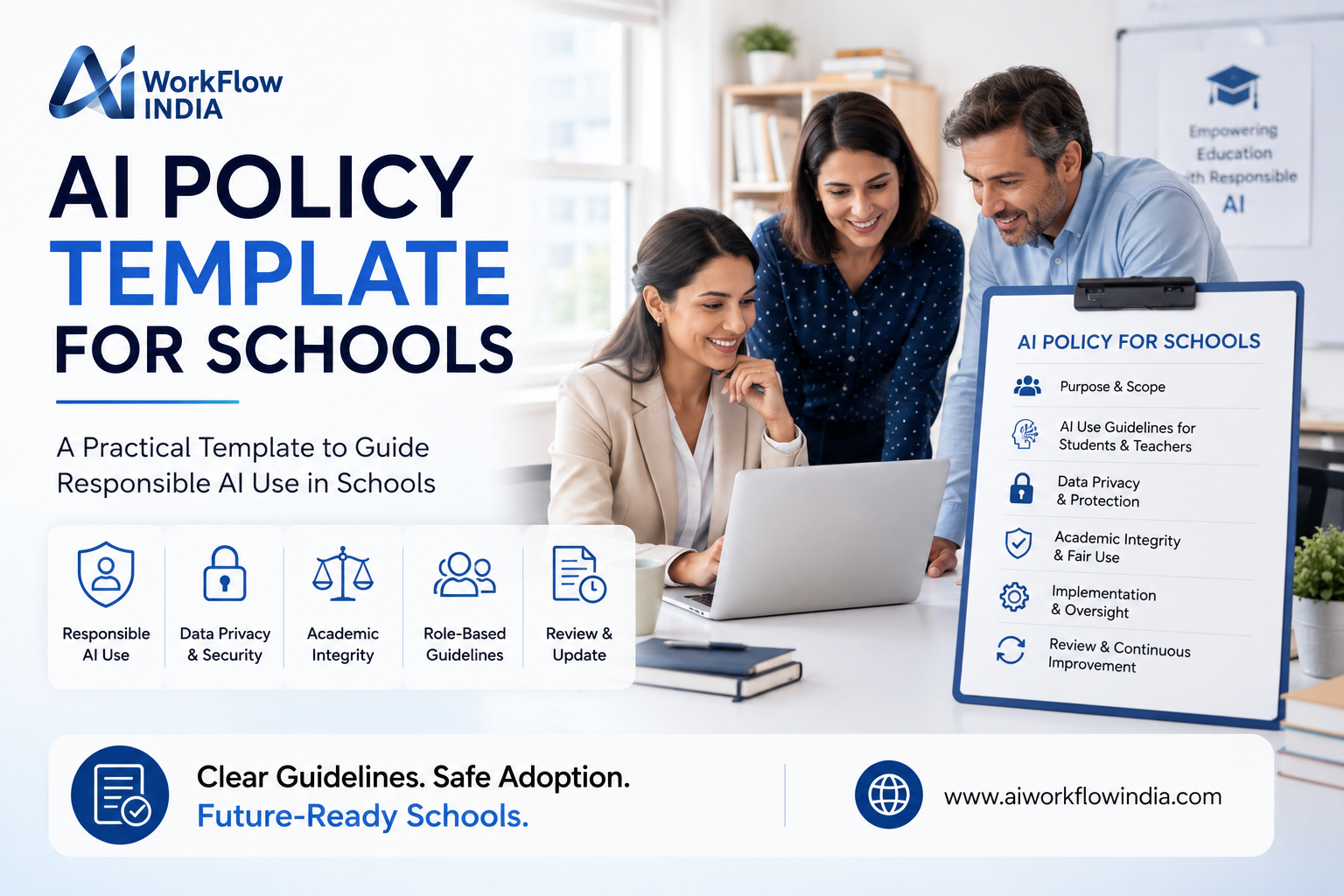
AI Policy Template for Schools

AI Policy Template for Schools: A Complete Guide for Educators in 2024
Artificial intelligence is no longer a futuristic concept. It’s already in your classrooms, whether you’ve planned for it or not. Students are using ChatGPT for homework. Teachers are exploring AI grading tools. And administrators? Many are scrambling to figure out the rules.
That’s exactly why every educational institution needs a solid AI policy for school environments. Without clear guidelines, you’re leaving students, teachers, and your entire learning community vulnerable to confusion, misuse, and missed opportunities.
In this guide, we’ll walk you through everything you need to create an effective AI policy template for schools. You’ll learn what to include, how to implement it, and why getting this right matters more than ever.
Why Your School Needs an AI Policy Right Now
Think about it. Students already have access to powerful AI tools on their phones. They can generate essays, solve math problems, and even write code in seconds. Without guidance, how do they know what’s acceptable?
A well-crafted school AI policy does several important things:
- Sets clear expectations for students and staff
- Protects student privacy and data security
- Promotes ethical use of technology
- Supports academic integrity standards
- Empowers teachers to use AI as a teaching tool
Schools that delay creating these guidelines often face bigger problems later. Plagiarism disputes increase. Parents raise concerns. Teachers feel unsupported. The good news? You can prevent all of this with proper planning.
Key Components of an Effective AI Policy Template for Schools
Creating a comprehensive artificial intelligence policy for education doesn’t have to be overwhelming. Here are the essential sections every template should include.
1. Purpose and Scope Statement
Start by explaining why this policy exists. Be direct and simple. State that the policy applies to all students, teachers, administrators, and support staff. Make it clear which AI tools fall under these guidelines.
For example, your statement might say: “This policy governs the use of artificial intelligence tools, including but not limited to generative AI, machine learning applications, and automated writing assistants, within all school activities and assignments.”
2. Acceptable Use Guidelines
This is where you define what’s allowed and what isn’t. Be specific but leave room for educational judgment. Consider creating different tiers of acceptable use:
- Always Permitted: Using AI for brainstorming, research assistance, and learning new concepts
- Permitted with Disclosure: Using AI to help edit or improve original work when properly cited
- Requires Teacher Approval: Using AI for specific assignments where the teacher has outlined parameters
- Never Permitted: Submitting AI-generated work as entirely original without disclosure
3. Academic Integrity Standards
Your AI guidelines for schools must address how artificial intelligence intersects with existing honor codes. Students need to understand that using AI without proper attribution can constitute academic dishonesty.
Include clear examples. Show students the difference between using AI to learn a concept and using it to complete work they should do themselves. Real scenarios help more than abstract rules.
4. Privacy and Data Protection Measures
This section is critical. Many AI tools collect and store user data. Your policy should address:
- Which AI platforms are approved for school use
- What student information can be shared with AI systems
- How the school will vet new AI tools for compliance
- Parent notification and consent requirements
Remember, students under 13 have additional protections under COPPA. Your policy must account for these regulations.
5. Teacher and Staff Guidelines
Don’t forget the adults. Teachers need guidance on how they can use AI for lesson planning, grading assistance, and administrative tasks. They also need training to recognize AI-generated student work and understand when AI use is appropriate in their specific subjects.
Consider investing in AI teacher training for schools to ensure your staff feels confident implementing these new policies. Professional development makes all the difference in successful policy adoption.
How to Implement Your School AI Policy Successfully
Having a great policy document means nothing if nobody follows it. Implementation requires thoughtful planning and ongoing commitment.
Start with Stakeholder Input
Before finalizing your AI policy school administrators should gather feedback from multiple groups. Talk to teachers about classroom realities. Ask students what tools they’re already using. Consult parents about their concerns and expectations.
This collaborative approach creates buy-in and catches blind spots you might miss on your own.
Communicate Clearly and Often
Roll out your policy with clear communication. Consider hosting information sessions for parents. Create student-friendly summaries. Post guidelines prominently on your school website.
Some schools have found success creating short videos explaining the policy. Others use homeroom discussions to walk through scenarios. Find what works for your community.
Build in Regular Reviews
AI technology changes rapidly. A policy written in January might need updates by September. Build a review schedule into your implementation plan. Quarterly check-ins work well for fast-moving technology issues.
Common Mistakes Schools Make with AI Policies
Learning from others’ missteps can save you time and frustration. Here are pitfalls to avoid.
Being Too Restrictive
Some schools react to AI by banning everything. This approach usually backfires. Students find workarounds, and teachers lose valuable instructional tools. Balance is essential.
Ignoring the Positives
AI offers real educational benefits. It can provide personalized learning support, help struggling writers improve their skills, and give teachers more time for meaningful student interaction. Your policy should embrace these opportunities, not just list prohibitions.
Failing to Update
A policy from 2023 might already feel outdated in 2024. New tools emerge constantly. Student behaviors evolve. Keep your artificial intelligence school guidelines current and relevant.
Sample Framework for Your AI Policy Template
Here’s a basic structure you can customize for your institution:
Section 1: Introduction and Purpose
Explain the policy’s goals and scope. Define key terms students might not understand.
Section 2: Permitted Uses
List approved AI applications and appropriate use cases for different grade levels and subjects.
Section 3: Prohibited Uses
Clearly state what violates policy and explain why these restrictions exist.
Section 4: Citation and Disclosure Requirements
Provide specific instructions for how students should acknowledge AI assistance in their work.
Section 5: Consequences
Outline what happens when students or staff violate the policy. Include progressive discipline measures.
Section 6: Appeals Process
Give people a fair way to dispute policy violation determinations.
Section 7: Review and Updates
State when and how the policy will be reviewed and revised.
Preparing Teachers for AI Policy Implementation
Your educators are on the front lines of policy enforcement. They need proper support and comprehensive AI training to handle the challenges ahead.
Effective AI education policy implementation depends on teachers who understand both the technology and the guidelines. They should know how to detect potential AI misuse while also recognizing legitimate educational applications.
Professional development should cover:
- How popular AI tools work and their capabilities
- Strategies for designing AI-resistant assignments
- Methods for having productive conversations with students about responsible AI use
- Techniques for integrating AI as a learning tool rather than a replacement for learning
Looking Ahead: The Future of AI in Education
The schools that thrive in the coming years will be those that embrace AI thoughtfully. They’ll create environments where technology enhances learning without replacing critical thinking and genuine skill development.
Your AI policy template for schools is just the starting point. As artificial intelligence continues evolving, so should your approach to managing it. Stay curious. Stay flexible. And most importantly, keep your students’ best interests at the center of every decision.
Ready to take the next step? Start by gathering your stakeholders, reviewing the framework we’ve outlined, and drafting your initial policy. The conversation might feel challenging at first, but your school community will thank you for providing clarity in an increasingly complex technological landscape.
FAQs About AI Policy for Schools
What should be included in a school AI policy?
A comprehensive AI policy for schools should include a purpose statement, acceptable use guidelines, academic integrity standards, privacy protections, teacher guidelines, consequences for violations, and a review schedule. The policy should be clear enough for students to understand while thorough enough to address various scenarios.
How often should schools update their AI policies?
Schools should review their artificial intelligence policies at least twice per year given how quickly AI technology evolves. Many institutions conduct quarterly reviews with major updates annually. Any time a significant new AI tool emerges or student behaviors shift noticeably, consider revisiting your guidelines.
Can schools completely ban AI tools?
While schools can attempt to ban AI tools, complete prohibition is often impractical and potentially counterproductive. Students access AI outside school hours, and bans don’t teach responsible use. Most education experts recommend balanced policies that guide appropriate use rather than blanket restrictions.
“`
—
**For Rank Math Meta Post:**
**Title:**
AI Policy Template for Schools: Complete Guide for Educators 2024
**Meta Description:**
Create an effective AI policy for your school with our comprehensive template. Learn what to include, how to implement it, and avoid common mistakes.
**Meta Keywords:**
AI policy school, AI policy template for schools, school AI policy, artificial intelligence policy education, AI guidelines schools, AI education policy, school technology policy