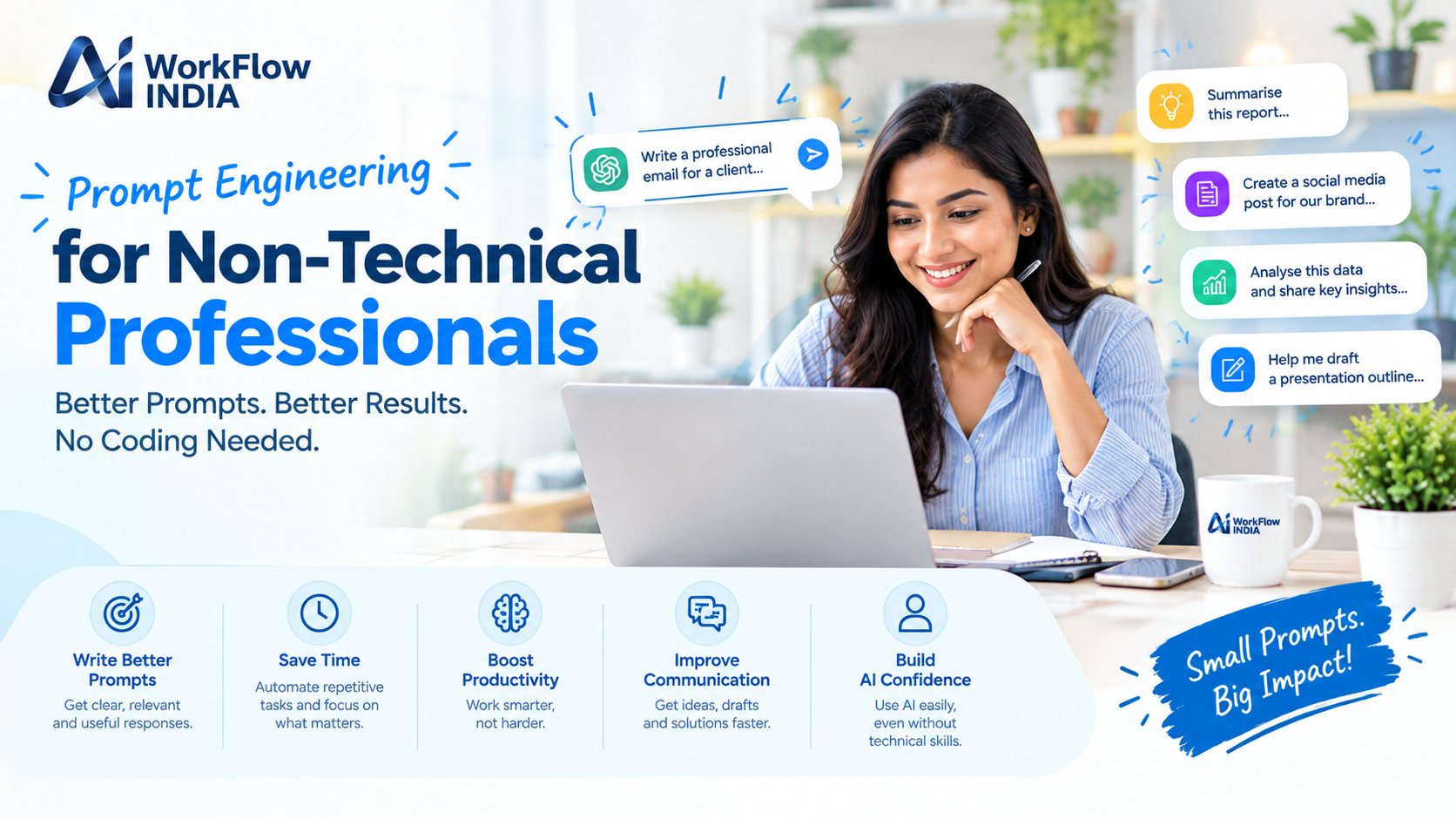
Prompt Engineering for Non-Technical Professionals

Have you ever talked to ChatGPT and felt like you were speaking different languages?
You ask a simple question, and the response misses the mark completely. Trust me, you’re not alone. The good news? There’s a skill that can change everything, and it doesn’t require a computer science degree.
Prompt engineering is quickly becoming one of the most valuable skills in today’s workplace. And here’s the exciting part you don’t need to be a developer or tech expert to master it. Whether you’re in marketing, HR, sales, or any other field, learning how to communicate effectively with AI tools can transform your productivity and career.
In this guide, we’ll break down everything you need to know about prompt engineering in simple terms. No jargon. No confusing technical explanations. Just practical strategies you can start using today.
What Is Prompt Engineering and Why Should You Care?
Let’s start with the basics. Prompt engineering is simply the art of crafting instructions that help AI tools understand exactly what you want. Think of it like giving directions to a new colleague. The clearer your instructions, the better the results.
But why does this matter for non-technical professionals?
- AI tools are everywhere now. From email assistants to content generators, AI is becoming part of daily work life.
- Better prompts save time. Instead of going back and forth with an AI, you get useful answers on the first try.
- It’s a competitive advantage. Professionals who can leverage AI effectively stand out in their organizations.
- No coding required. You’re working with natural language, not programming code.
The truth is, AI tools are only as good as the instructions they receive. Learning to write effective prompts is like learning a new communication skill – one that pays dividends across every aspect of your work.
The Core Principles of Effective Prompt Writing
Before we dive into specific techniques, let’s cover the fundamental principles that make prompts work. These concepts apply whether you’re using ChatGPT, Claude, Gemini, or any other AI assistant.
Be Specific and Detailed
Vague prompts lead to vague answers. Instead of asking “Write me an email,” try “Write a professional email to a client explaining a two-week project delay, offering solutions, and maintaining a positive relationship.”
See the difference? The second prompt gives the AI context, purpose, and tone. It knows exactly what you need.
Provide Context
AI doesn’t know your situation unless you explain it. Share relevant background information. Tell the AI about your audience, your goals, and any constraints you’re working with.
For example: “I’m a marketing manager at a small software company. Our target audience is small business owners aged 35-50 who aren’t very tech-savvy.”
Define the Format You Want
Do you want bullet points? A formal report? A casual blog post? Tell the AI upfront. This simple step eliminates most reformatting work on your end.
Practical Prompt Engineering Techniques for Everyday Work
Now let’s get into the actionable strategies you can use immediately. These techniques work for professionals in any industry.
The Role-Playing Technique
One of the most powerful prompt engineering techniques is assigning the AI a specific role. This shapes the entire response.
Example: “Act as an experienced HR consultant. Review this job description and suggest improvements to attract more diverse candidates.”
By setting the role, you tap into more specialized and relevant responses. The AI adjusts its expertise, vocabulary, and approach accordingly.
The Step-by-Step Approach
For complex tasks, break them into smaller steps. This prevents the AI from getting overwhelmed and ensures more accurate results.
Instead of: “Create a complete marketing strategy for my product launch.”
Try: “Let’s develop a marketing strategy for my product launch. First, help me identify our target audience segments. Consider that we’re launching a budget-friendly project management tool for freelancers.”
Then follow up with additional prompts for each subsequent step.
The Example Method
Showing the AI what you want often works better than explaining it. Include examples of the style, tone, or format you’re looking for.
Example: “Write product descriptions in this style: ‘Our classic leather wallet combines timeless elegance with modern functionality. Crafted from premium Italian leather, it ages beautifully while protecting what matters most.'”
Building Your Prompt Engineering Skills Over Time
Like any skill, effective prompt crafting improves with practice. Here’s how to develop your abilities systematically.
Start a Prompt Library
Keep a document of prompts that work well for you. Organize them by category – emails, reports, brainstorming, analysis, and so on. This becomes your personal toolkit.
Learn from Feedback
When an AI response misses the mark, don’t just start over. Ask yourself what was missing from your prompt. Was it unclear? Did it lack context? Use this feedback to improve.
Iterate and Refine
Great prompts rarely happen on the first attempt. Start with a basic prompt, review the output, and then refine your instructions. Each iteration gets you closer to the perfect result.
If you’re serious about developing these skills further, consider exploring structured professional AI learning programs designed specifically for non-technical professionals. These resources can accelerate your journey from beginner to advanced prompt engineer.
Common Prompt Engineering Mistakes to Avoid
Learning what not to do is just as important as learning best practices. Here are the most common pitfalls.
Being Too Vague
“Help me with my presentation” gives the AI nothing to work with. What’s the topic? Who’s the audience? What’s the goal? Fill in these gaps.
Overloading Your Prompt
Cramming too many requests into one prompt often leads to incomplete responses. Focus on one main task at a time, then build from there.
Forgetting to Specify Tone
Professional? Casual? Friendly? Authoritative? The tone of AI output depends entirely on your instructions. Never assume the AI will guess correctly.
Not Providing Examples
When you need a specific style or format, showing beats telling. Include samples of what good looks like to you.
Real-World Applications Across Different Professions
Let’s look at how professionals in various fields are using AI prompting skills to enhance their work.
Marketing and Communications
- Generating content ideas and outlines
- Writing and refining ad copy
- Creating social media content calendars
- Analyzing competitor messaging
Human Resources
- Drafting job descriptions
- Creating interview questions
- Developing training materials
- Writing policy documents
Sales and Business Development
- Personalizing outreach emails
- Preparing for client meetings
- Creating proposal drafts
- Researching prospects
Project Management
- Breaking down complex projects
- Writing status updates
- Identifying potential risks
- Creating meeting agendas
The applications are virtually endless. As you develop your prompt engineering skills, you’ll discover new ways to integrate AI assistance into your daily workflows.
The Future of Work and AI Communication
Here’s the reality: AI isn’t going anywhere. It’s becoming more integrated into workplaces every day. Professionals who learn to communicate effectively with these tools will have a significant advantage.
But this isn’t about replacing human skills. It’s about augmentation. The best results come from combining human creativity, judgment, and expertise with AI’s speed and capabilities.
Think of prompt engineering as a bridge between human intention and AI execution. The better you build that bridge, the more value you create.
Ready to take your skills to the next level? Explore comprehensive training options through structured learning pathways that guide you from fundamentals to advanced techniques.
Frequently Asked Questions
Do I need technical skills to learn prompt engineering?
No, you don’t need any coding or technical background. Prompt engineering for beginners focuses on clear communication and logical thinking. If you can write clear instructions and think step by step, you can master this skill. Most successful prompt engineers in business roles come from non-technical backgrounds.
How long does it take to become proficient at writing prompts?
Most people see significant improvement within a few weeks of regular practice. The basics can be learned in a few hours, but developing advanced AI communication techniques is an ongoing process. The more you practice, the more intuitive it becomes.
What industries benefit most from prompt engineering skills?
Every industry can benefit, but marketing, customer service, content creation, HR, legal, and consulting see particularly high value. Any role involving writing, analysis, research, or creative thinking can leverage these skills effectively.