
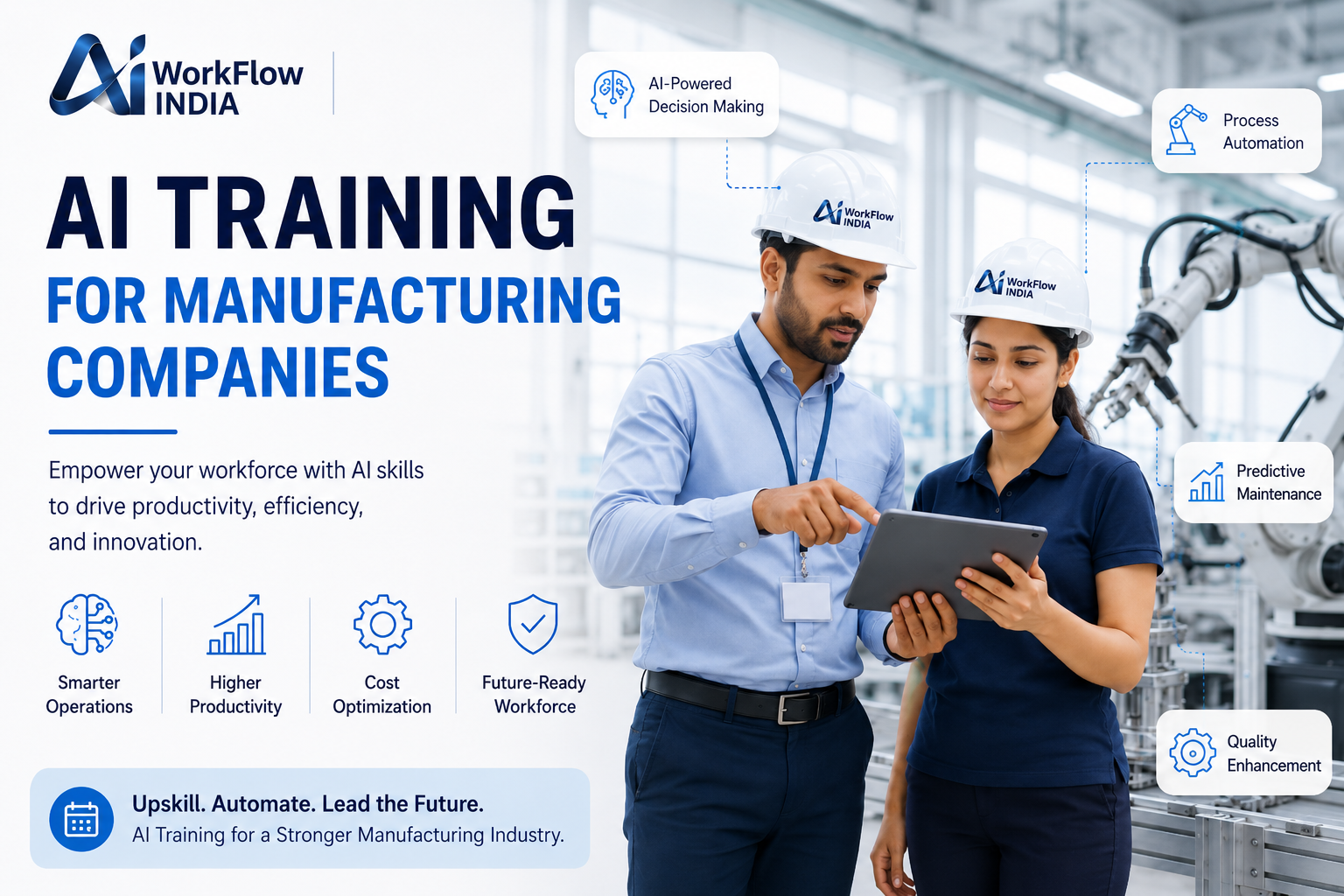
AI for Manufacturing: Boost Productivity Without Coding

What if you could transform your factory floor without writing a single line of code? That’s not a distant dream anymore. AI manufacturing solutions are revolutionizing how production facilities operate, and the best part is you don’t need a computer science degree to make it happen.
For decades, manufacturing leaders believed that artificial intelligence was only accessible to tech giants with massive budgets and armies of programmers. But times have changed dramatically. Today, AI for manufacturing has become surprisingly accessible, intuitive, and incredibly powerful for businesses of all sizes.
In this guide, we’ll explore how you can harness the power of artificial intelligence to boost your manufacturing productivity, reduce costly downtime, and stay competitive in an increasingly automated world—all without touching a single line of code.
Why AI Manufacturing Is No Longer Just for Tech Companies
Remember when smartphones seemed like science fiction? Now your grandmother uses one daily. The same transformation is happening with industrial AI solutions right now.
Modern manufacturing AI platforms have evolved to become user-friendly tools that anyone can operate. These no-code solutions use visual interfaces, drag-and-drop features, and pre-built templates that make implementation straightforward.
Here’s why this matters for your business:
- Reduced implementation time – What once took months now takes weeks
- Lower costs – No need to hire expensive software developers
- Faster ROI – Start seeing results almost immediately
- Employee empowerment – Your existing team can manage the technology
The democratization of smart manufacturing technology means that small and mid-sized manufacturers can now compete with industry giants on a more level playing field.
Key Areas Where AI Transforms Manufacturing Operations
Artificial intelligence isn’t just one tool—it’s a toolkit filled with solutions for different challenges. Let’s break down the most impactful applications.
Predictive Maintenance That Actually Works
Equipment breakdowns are every plant manager’s nightmare. Unexpected downtime costs manufacturers an estimated $50 billion annually. But what if your machines could tell you when they’re about to fail?
AI-powered predictive maintenance systems analyze data from sensors, vibration monitors, and temperature gauges to identify patterns that humans simply cannot detect. These systems can predict equipment failures days or even weeks before they happen.
The result? You schedule repairs during planned downtime instead of scrambling during a crisis. One automotive parts manufacturer reduced unplanned downtime by 35% within six months of implementing predictive maintenance AI.
Quality Control That Never Gets Tired
Human inspectors are excellent, but they get tired, they blink, and they occasionally miss defects. Machine vision systems powered by AI can inspect thousands of products per minute with consistent accuracy.
These systems use cameras and intelligent algorithms to:
- Detect surface defects invisible to the human eye
- Measure dimensions with microscopic precision
- Identify assembly errors before products ship
- Sort products automatically based on quality grades
A food packaging company recently reported catching 40% more defects after implementing AI-based quality inspection, dramatically reducing customer complaints and returns.
Production Optimization and Scheduling
Managing production schedules feels like solving a puzzle with constantly changing pieces. AI scheduling tools consider hundreds of variables simultaneously—machine availability, worker shifts, material supplies, customer deadlines, and energy costs—to create optimal production plans.
These intelligent systems continuously adjust schedules in real-time as conditions change, ensuring maximum efficiency without constant human intervention.
Getting Started with No-Code AI Solutions
The thought of implementing artificial intelligence might seem overwhelming, but modern platforms have simplified the process significantly. Here’s a practical roadmap to get you started.
Step 1: Identify Your Biggest Pain Points
Before jumping into technology, ask yourself: What problems cost you the most money? Where do bottlenecks occur? What keeps you up at night?
Common starting points include:
- Excessive machine downtime
- High defect rates
- Inventory management challenges
- Energy consumption issues
- Supply chain unpredictability
Step 2: Choose the Right Platform
Not all AI platforms are created equal. Look for solutions specifically designed for manufacturing environments with no-code interfaces. The best platforms offer templates tailored to common manufacturing use cases.
When evaluating options, consider factors like integration capabilities with your existing equipment, scalability, vendor support, and total cost of ownership.
Step 3: Invest in Proper Training
Even no-code solutions require some learning. Your team needs to understand how to use these tools effectively, interpret results, and make data-driven decisions. Investing in comprehensive AI training for manufacturing teams ensures successful adoption and maximizes your return on investment.
Many organizations find that dedicated training programs accelerate implementation timelines and help employees embrace the technology rather than fear it.
Step 4: Start Small, Scale Fast
Don’t try to transform your entire operation overnight. Begin with a pilot project on a single production line or with one specific challenge. Prove the concept, measure results, gather learnings, then expand to other areas.
This approach reduces risk and builds organizational confidence in the technology.
Real Results from Real Manufacturers
Theory is nice, but results matter more. Here’s what manufacturers across various industries are actually achieving with AI-driven production systems.
A mid-sized electronics manufacturer in Ohio implemented predictive maintenance AI and saw:
- 27% reduction in maintenance costs
- 45% decrease in unplanned downtime
- 18% improvement in overall equipment effectiveness
A textile company in North Carolina used AI-powered quality control and experienced:
- 52% fewer customer returns
- 33% reduction in waste materials
- Faster production speeds without sacrificing quality
These aren’t theoretical projections—they’re actual results from companies that took the leap into smart factory solutions.
Overcoming Common Concerns About Manufacturing AI
Change isn’t easy, and new technology can feel intimidating. Let’s address some common concerns head-on.
Will AI Replace My Workers?
This is probably the most common fear, and it’s understandable. But here’s the reality: AI in manufacturing typically augments human workers rather than replacing them. It handles repetitive, dangerous, or highly precise tasks while humans focus on problem-solving, creativity, and decision-making.
In fact, many manufacturers report that AI implementation creates new roles and upskilling opportunities for existing employees.
Is My Data Secure?
Legitimate concern. Reputable industrial automation AI providers prioritize data security with encryption, access controls, and compliance with industry standards. Always verify security certifications and data handling practices before choosing a vendor.
What If It Doesn’t Work for My Specific Operation?
Modern AI platforms are highly customizable. They learn from your specific equipment, processes, and conditions. Starting with a pilot project allows you to test compatibility before committing to a full rollout.
The Future Is Already Here
The manufacturing industry stands at a crossroads. Companies that embrace AI manufacturing technologies now will gain significant competitive advantages. Those that wait may find themselves struggling to catch up.
The good news is that the barriers to entry have never been lower. No-code platforms, affordable pricing models, and proven implementation strategies make this the perfect time to start your AI journey.
Your competitors are already exploring these technologies. The question isn’t whether AI will transform manufacturing—it’s whether you’ll be leading that transformation or scrambling to follow.
Ready to take the first step? Explore how your team can gain the skills needed to implement and manage AI solutions effectively. The future of manufacturing is intelligent, efficient, and surprisingly accessible.
Frequently Asked Questions
How much does it cost to implement AI in manufacturing?
Costs vary widely depending on scope and complexity. No-code solutions typically start from a few hundred dollars monthly for basic applications. Larger enterprise implementations may require significant upfront investment but often deliver ROI within 12-18 months through reduced downtime, improved quality, and increased efficiency. Many vendors offer pilot programs to test value before committing to full deployment.
Do I need technical staff to manage AI manufacturing systems?
Modern no-code AI platforms are designed for non-technical users. Your existing operations, maintenance, or quality teams can typically manage these systems after proper training. However, having someone designated as an AI champion who deeply understands both the technology and your manufacturing processes significantly improves outcomes.
How long does it take to see results from manufacturing AI?
Many manufacturers see initial results within weeks of implementation, especially with applications like quality inspection or basic predictive maintenance. More complex optimization projects may take several months to fully calibrate and deliver maximum benefits. Starting with a focused pilot project allows you to demonstrate value quickly while building toward larger implementations.
Related resources
- Explore our AI Training for Manufacturing.
- More guides in AI for Industries.