Agentic AI Explained for Students: The Skill India Has a 1-Million-Person Shortage In (2026)

What if I told you there’s a skill so valuable that India will need over 1 million professionals trained in it by 2026, but most students have never heard of it? That skill is agentic AI, and it’s about to change everything you know about technology careers.
If you’re a student in India wondering what to learn next, pay close attention. Agentic AI India is becoming the hottest career path in tech, and getting in early could set you up for life. Companies are scrambling to find talent, salaries are skyrocketing, and the best part? You don’t need to be a coding genius to get started.
In this guide, I’ll break down AI agents explained in simple terms, show you why there’s a massive AI skills shortage India is facing, and help you understand how you can ride this wave to a successful career.
What Exactly is Agentic AI?
Let me explain this in a way that actually makes sense.
Think about how you use ChatGPT or Google Assistant. You ask a question, get an answer, and that’s it. The AI waits for your next command. It’s like having a really smart friend who only speaks when spoken to.
Agentic AI is completely different.
An AI agent can think, plan, and act on its own. Give it a goal, and it figures out the steps to achieve it. It can:
- Break down complex tasks into smaller steps
- Make decisions without constant human input
- Use different tools and apps to get things done
- Learn from mistakes and improve over time
- Work 24/7 without getting tired
Imagine telling an AI agent: “Book me the cheapest flight to Delhi next Friday, find a hotel near the conference center, and add both to my calendar.” A regular AI would just give you information. An agentic AI would actually do all of this for you.
That’s the power we’re talking about. And businesses across India are desperate to build and deploy these systems.
The Shocking AI Skills Shortage India is Facing
Here’s where things get interesting for students.
According to NASSCOM AI jobs 2026 projections, India will need approximately 1 million AI professionals by 2026. But here’s the problem – we currently have nowhere near that number of trained people.
The gap is massive. And it’s growing every single day.
Why is this happening? A few reasons:
First, every company wants to use AI now. From small startups in Bangalore to massive corporations in Mumbai, everyone is racing to implement AI agents into their business.
Second, traditional education hasn’t caught up. Most colleges are still teaching outdated programming concepts while the industry has moved on to agentic systems.
Third, the technology is evolving incredibly fast. What worked six months ago is already outdated. This creates constant demand for fresh skills and knowledge.
For students, this shortage isn’t a problem. It’s an opportunity. A massive one.
Why Learning AI Agents is the Smartest Career Move Right Now
Let me give you some numbers that might surprise you.
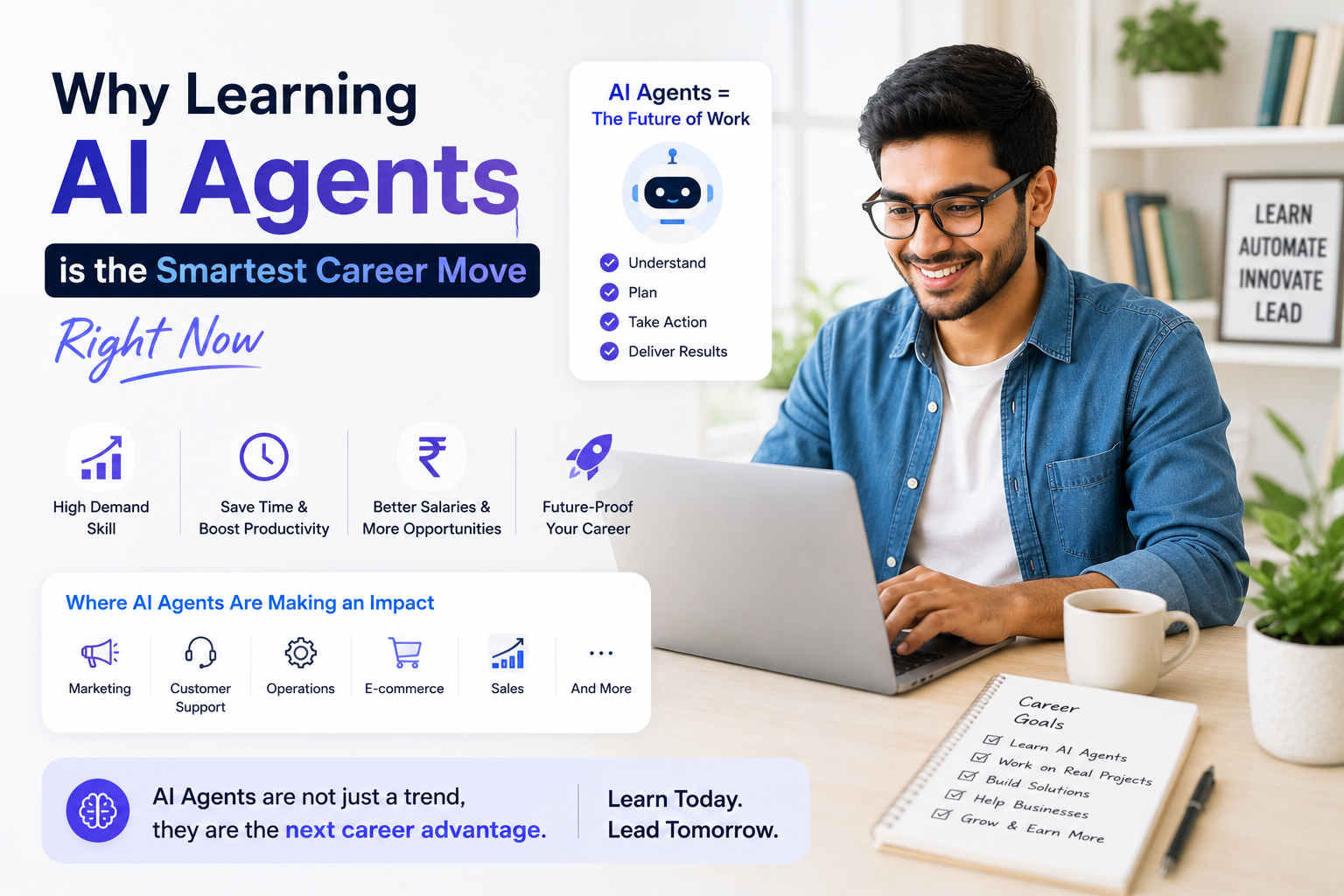
The highest paying AI skills India offers right now are directly related to agentic AI development. Entry-level positions are starting at 8-12 LPA, while experienced professionals are commanding 25-50 LPA or even more.
Compare this to traditional IT jobs where freshers might start at 3-5 LPA. The difference is staggering.
But salary isn’t the only benefit. Consider these advantages:
- Remote work opportunities – Many AI companies let you work from anywhere
- Global demand – Your skills are valuable worldwide, not just in India
- Future-proof career – AI is only going to become more important
- Creative work – You’ll solve interesting problems, not boring repetitive tasks
- Entrepreneurship potential – Start your own AI agency or product company
The students who learn AI agents today will be the leaders of tomorrow’s tech industry. It’s that simple.
Good News: You Don’t Need to Be a Coding Expert
Here’s something most people don’t realize.
The rise of no-code AI agents has completely changed who can enter this field. You no longer need years of programming experience or a computer science degree to build powerful AI systems.
Platforms and tools now exist that let you create sophisticated AI agents using visual interfaces. You drag, drop, and connect different components. The technical complexity happens behind the scenes.
This doesn’t mean coding is useless. Knowing Python or JavaScript will definitely help you build more advanced systems. But it’s no longer a barrier to entry.
Students from any background – commerce, arts, science – can start learning and building AI agents today. The playing field has never been more level.
If you’re serious about developing these skills, consider exploring structured learning paths. Programs like the AI courses designed specifically for Indian students can give you the foundation and hands-on experience you need to stand out in this competitive market.
What Skills Do You Actually Need to Learn?
Let’s get practical. If you want to work with agentic AI, here’s what you should focus on:
Understanding Large Language Models (LLMs)
These are the brains behind AI agents. You need to understand how models like GPT-4, Claude, and Gemini work. Not the complex math behind them, but how to use them effectively.
Prompt Engineering
This is the art of communicating with AI. How you phrase instructions dramatically affects the results you get. Good prompt engineers are in extremely high demand.
Workflow Automation
AI agents don’t work in isolation. They connect with other tools, databases, and APIs. Understanding how to create automated workflows is crucial.
Problem-Solving Thinking
The best AI developers aren’t just technical experts. They understand business problems and can design AI solutions that actually help people.
Basic Programming (Optional but Helpful)
Python remains the most popular language for AI development. Even basic knowledge opens up more possibilities for customization.
Real-World Applications of AI Agents in India
This isn’t just theory. Companies across India are already using AI agents in fascinating ways.
Customer Service: Banks like HDFC and ICICI use AI agents to handle millions of customer queries. These agents can understand complex questions, access account information, and resolve issues without human intervention.
Healthcare: AI agents are helping doctors analyze medical reports, schedule appointments, and even assist in preliminary diagnoses. Apollo Hospitals and Fortis are leading this transformation.
E-commerce: Flipkart and Amazon India use AI agents for personalized recommendations, inventory management, and customer support. Every suggestion you see is powered by intelligent systems.
Education: EdTech companies like Byju’s and Unacademy use AI agents to personalize learning experiences for millions of students.
Finance: AI agents are revolutionizing trading, fraud detection, and investment advice. Zerodha and Groww are investing heavily in this technology.
The demand spans every industry. And it’s only accelerating.
How to Start Your Agentic AI Journey Today
Feeling overwhelmed? Don’t be. Here’s a simple roadmap to get started:
Month 1-2: Build your foundation. Understand what AI is, how it works, and what makes agentic AI special. Watch YouTube tutorials, read articles, and experiment with tools like ChatGPT and Claude.
Month 3-4: Learn prompt engineering. Practice writing effective instructions for AI systems. This skill alone can land you freelance gigs.
Month 5-6: Start building simple AI agents using no-code platforms. Create projects you can show to potential employers.
Month 7-8: If interested, pick up basic Python. This expands what you can build significantly.
Month 9-12: Work on real projects. Freelance, intern, or build your own AI-powered product.
The key is consistent action. Thirty minutes of learning every day beats occasional marathon sessions.
For a structured approach with mentorship and placement support, professional AI training programs in India can significantly accelerate your learning curve and connect you with industry opportunities.
The 2026 Deadline is Closer Than You Think
Here’s my honest advice as someone who has watched tech trends for over 15 years.
The window of opportunity is open right now, but it won’t stay open forever. As more students discover the potential of agentic AI, competition will increase. The early movers will have a massive advantage.
By 2026, the NASSCOM AI jobs projections show that companies will be hiring aggressively. Those who started learning in 2024 and 2025 will be ready with skills and experience. Those who wait will be competing with an entire generation of AI-native students.
The choice is yours. But if you’re reading this article, you’re already ahead of most students who haven’t even heard of agentic AI yet.
Don’t waste that advantage.
Frequently Asked Questions
Can I learn agentic AI without a technical background?
Absolutely. With the rise of no-code AI agents and visual development platforms, students from any background can start learning. While technical knowledge helps you build more advanced systems, it’s not required to begin your journey. Many successful AI professionals started with zero coding experience.
How long does it take to get a job in AI agents?
With focused learning and consistent practice, most students can develop job-ready skills in 6-12 months. The key is building a portfolio of projects that demonstrate your abilities. Some students land internships even earlier, especially if they can show practical experience with popular AI tools.
What salary can I expect as an AI agent developer in India?
Entry-level positions typically start between 6-12 LPA depending on your skills and the company. With 2-3 years of experience, salaries can reach 20-35 LPA. Senior AI professionals and specialists often earn 50 LPA or more. Freelance AI developers can also earn significantly by working with multiple clients.
Related resources
- Explore our AI courses for students in India.
- More guides in Learn AI & Careers.